The healthcare website problem
Most healthcare websites are built by general-purpose agencies that do not understand compliance requirements. The result: websites that look professional but create legal liability, or websites that are compliant but convert poorly.
In 2026, patients expect the same digital experience from their healthcare provider that they get from their bank or favorite ecommerce store. The practices that deliver that experience capture more patients.
HIPAA compliance for healthcare websites
What HIPAA requires for your website
Not every healthcare website needs full HIPAA compliance. Here is when it applies:
- Contact forms that collect health information require encryption and a Business Associate Agreement (BAA) with your hosting provider
- Patient portals with access to medical records need end-to-end encryption, access controls, and audit logging
- Telehealth platforms require HIPAA-compliant video infrastructure
- Online scheduling that asks about symptoms or conditions needs secure data handling
Common compliance mistakes
- Using standard WordPress contact forms to collect patient information
- Hosting on providers without a signed BAA (most shared hosting does not offer this)
- Storing patient data in Google Analytics or third-party cookies
- Using non-compliant chat widgets for patient communication
What compliant architecture looks like
A properly designed healthcare website uses:
- HIPAA-compliant hosting with AWS, Azure, or Google Cloud (all offer BAAs)
- Encrypted data transmission with TLS 1.3 for all patient-facing pages
- Access controls with role-based permissions and multi-factor authentication
- Audit logging that tracks every access to patient information
- Data encryption at rest using AES-256 for stored patient data
Patient portal design that patients actually use
A patient portal that nobody uses is worse than no portal at all. Here is what drives adoption:
Make registration effortless
Pre-fill information from the intake process. Require only email and phone number for initial registration. Add clinical details after the first appointment.
Focus on the three things patients want
- Appointment scheduling with real-time availability
- Test results delivered within hours of availability
- Secure messaging with their care team
Everything else is secondary. Build these three features well before adding anything else.
Mobile-first design is mandatory
72% of patient portal access happens on mobile devices. If your portal is not optimized for a 5-inch screen, most patients will not use it.
Healthcare website elements that convert
Online scheduling reduces no-shows by 60%
Patients who book their own appointments show up more often because they chose a time that works for their schedule. Self-scheduling also eliminates phone tag with your front desk.
Provider profiles build trust
Patients want to see their doctor before they book. Include professional headshots, credentials, specialties, and a brief personal statement. Pages with provider photos convert 35% higher than those without.
Insurance verification before the visit
Nothing frustrates patients more than discovering their insurance is not accepted after they arrive. A real-time insurance checker on your website eliminates this friction.
Reviews and testimonials with context
Generic star ratings mean less than specific outcomes. "Dr. Smith helped me manage my diabetes with a personalized plan" converts better than "5 stars, great doctor."
How much does a healthcare website cost?
| Type | Investment | Timeline |
|---|---|---|
| Informational practice website | $8K to $15K | 3 to 4 weeks |
| Website with online scheduling | $15K to $30K | 4 to 6 weeks |
| Full patient portal with EHR integration | $40K to $80K | 8 to 14 weeks |
| Custom telehealth platform | $50K to $120K | 10 to 16 weeks |
What we build for healthcare providers
Techlancers builds HIPAA-compliant healthcare systems including:
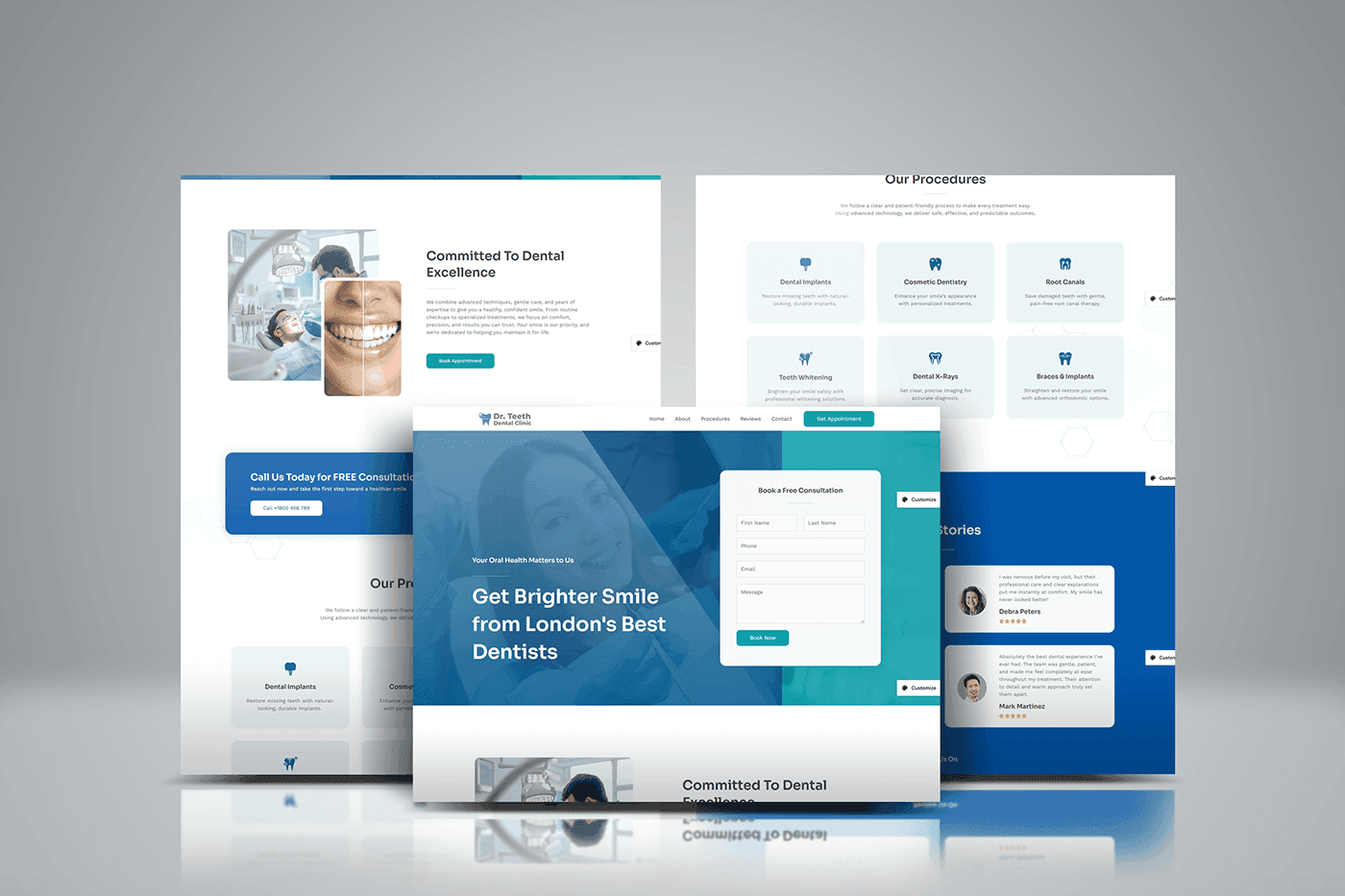
- Practice websites with online scheduling and insurance verification
- Patient portals integrated with Epic, Cerner, Athena, and DrChrono
- Telehealth platforms with compliant video and documentation
- Internal tools for care coordination and clinical workflows
Every system includes HIPAA compliance documentation, security audits, and ongoing monitoring.
Book a fit call to discuss your practice needs.